
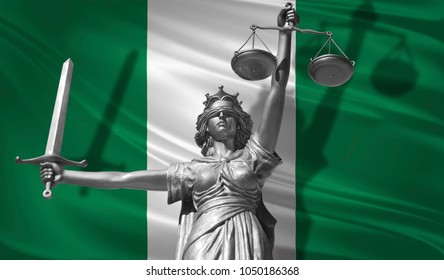

By LAWAL HALIMAT
— And How Boko Haram, Banditry, Nnamdi Kanu and Sunday Igboho Highlight the Crisis
Nigeria is a nation blessed with people, culture, and brilliance. But one thing we continue to struggle with—loudly and painfully—is the consistent application of our own laws. For many Nigerians, the legal system feels like a puzzle with missing pieces, where justice appears straightforward on paper but confusing in real life.
This inconsistency isn’t just a minor flaw. It affects how safe we feel, how much we trust our leaders, and how hopeful we remain about the future. And the truth is, nothing reveals this incoherence more clearly than the way different high-profile cases and security crises are handled.
1. Boko Haram and the Question of Justice
For over a decade, Boko Haram has brought unimaginable pain—bombings, killings, abductions, and entire communities wiped out or displaced.
Yet, when it comes to how arrested insurgents are treated, Nigerians are often left with more questions than answers.
Some are reportedly rehabilitated.
Some are reintegrated.
Some face unclear prosecutions.
To the ordinary citizen, this feels strange. How do people responsible for mass destruction get processes that seem calmer or softer than what others face for far lesser offenses?
This is where trust begins to crumble.
2. Nnamdi Kanu:
A Case That Divided The Nation and Exposed Legal Gaps
Nnamdi Kanu’s case has been one of the most talked-about legal sagas in recent times.Arrested, detained, tried, re-tried, and surrounded by debates about court orders and constitutional rights—his situation highlights something deeper:> When court rulings appear to be ignored or selectively applied, the people begin to question whether the law still has meaning.
Regardless of one’s opinion on Kanu’s ideology, a nation cannot afford legal uncertainty. Justice must be predictable, not improvised.
3. Sunday Igboho and the Unevenness of Enforcement
A similar pattern appears in the case of Sunday Igboho, the Yoruba Nation advocate. His arrest outside Nigeria, the speed of government action, his detention, and the massive public reaction all revealed something familiar:
The law acts swiftly in some cases but slowly in others.And when Nigerians compare these swift actions to how violent criminals roam free within the country, confusion naturally grows.
4. Meanwhile, Armed Bandits Continue to Terrorize the Nation
While the nation debates these political and legal cases, armed bandits have turned entire parts of Nigeria into danger zones.
Kidnappings on highways.Mass abductions of schoolchildren.Villages attacked and extorted.Lives shattered overnight.
Yet the government’s response often seems slow, reactive, or poorly communicated. Few prosecutions make headlines. Few details reach the public. Nigerians rarely hear about convictions or strong legal consequences.
This silence feels like the loudest inconsistency of all.
5. So What’s the Real Problem?
When you put all these cases side by side, a painful picture emerges:
Boko Haram suspects sometimes get ambiguous legal treatment
Nnamdi Kanu’s court orders raise debates
Sunday Igboho’s case moved swiftly
Bandits operate with little visible accountability
The conclusion becomes unavoidable:> The problem is not the absence of law—but inconsistent enforcement of the law.
And this inconsistency fuels fear, anger, division, and distrust.
6. What Nigeria Needs Going Forward
For Nigeria to become a safer, stronger country, the law must be:
✔ Clear
✔ Consistent
✔ Transparent
✔ Equal for everyone
Court orders must be respected.Criminals must be prosecuted openly.
Victims must feel protected.
And citizens must see justice being done—not just hear promises of it.
Because a country where the law is uncertain will always struggle with insecurity.
And a country where the law is selective will always struggle with unity.
In Conclusion
The unrest we face—from terrorism to banditry to political conflict—shows that justice is not a luxury. It is a foundation. And until Nigeria strengthens its commitment to a fair, predictable legal system, the cycle of insecurity will continue.
But there is hope.
A united demand for consistent justice can push the nation toward real reform—toward a Nigeria where the law finally works for everyone.